
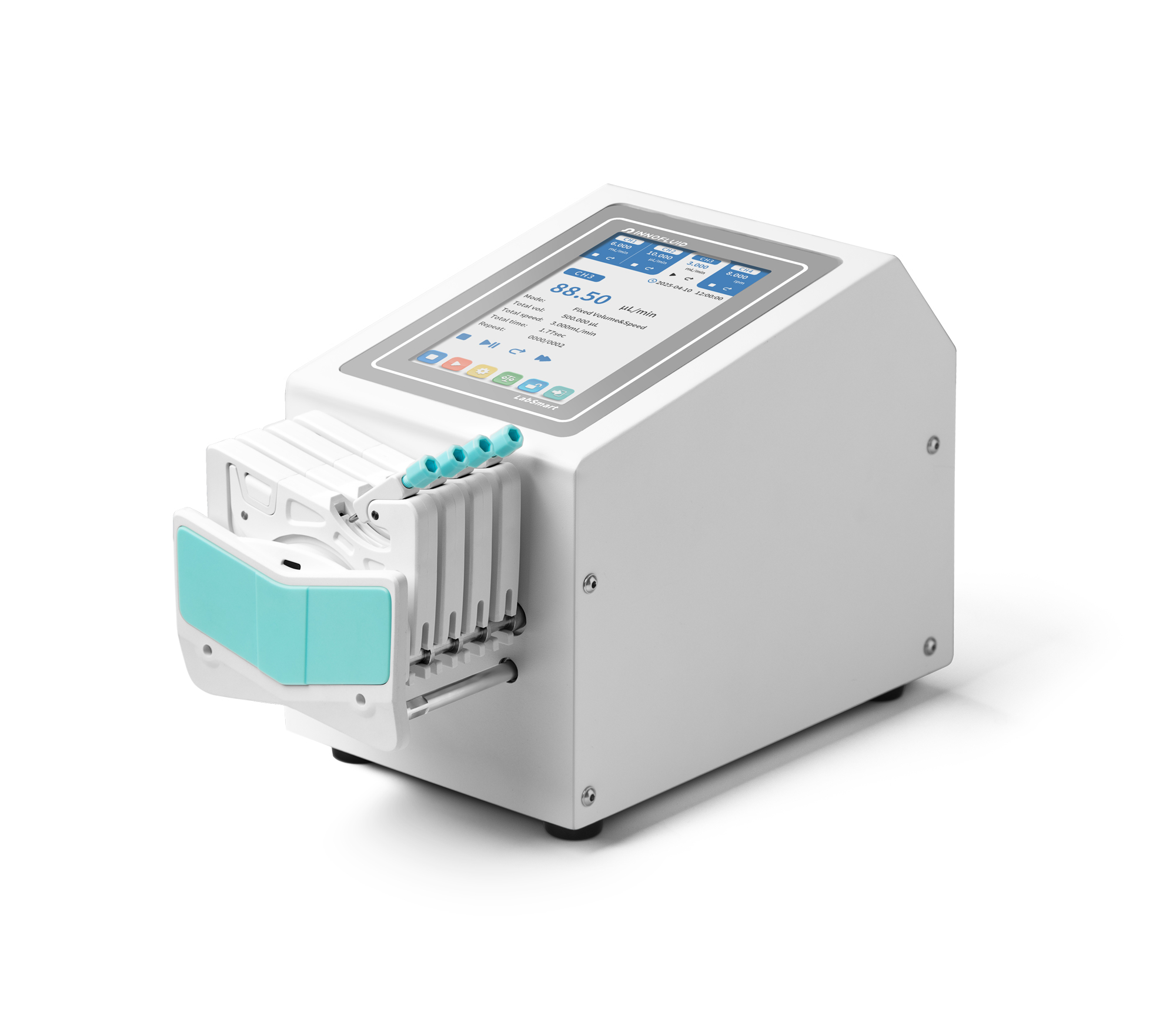
5 Advantages of Peristaltic Pumps for Accurate Liquid Transfer in Laboratories

In modern scientific laboratories, precision liquid handling is critical. Whether transferring sensitive biological samples, dosing pharmaceutical ingredients, or moving corrosive chemicals, laboratories require fluid transfer systems that are accurate, contamination-free, and reliable.

This is why laboratory-grade peristaltic pumps have become an essential tool across university research facilities, pharmaceutical production laboratories, biotechnology companies, and medical testing environments.

Unlike traditional industrial pumps designed for mining, wastewater, or heavy manufacturing, laboratory peristaltic pumps are engineered specifically for scientific precision. Their ability to deliver highly accurate, repeatable liquid transfer while maintaining sample integrity makes them one of the most trusted liquid handling technologies in modern laboratories.

LabDirect's Peristaltic pumps are widely used for applications including cell culture media transfer, chromatography, chemical reagent dosing, filtration processes, and pharmaceutical dispensing.


What is a Laboratory Peristaltic Pump?

A peristaltic pump operates using rotating rollers that compress flexible tubing to move liquid through the system. The liquid only contacts the inside of the tubing, never the mechanical pump components themselves.

This simple but highly effective pumping mechanism offers several major advantages for laboratory environments where contamination control and dosing precision are essential.

Laboratory-grade peristaltic pumps are commonly used in:

  • University research laboratories
  • Pharmaceutical manufacturing
  • Biotechnology facilities
  • Medical diagnostics laboratories
  • Cell culture and microbiology labs
  • Chemical analysis laboratories
  • Filtration and chromatography systems

1. Exceptional Accuracy for Precise Liquid Dosing

One of the biggest advantages of laboratory peristaltic pumps is their ability to deliver highly accurate and repeatable flow rates.

Modern laboratory peristaltic pumps from manufacturers such as Innofluid can achieve dosing accuracy levels as precise as ±0.5%, making them ideal for pharmaceutical and analytical laboratory applications.

In university and pharmaceutical laboratories, even minor liquid transfer errors can affect:

  • Experimental reproducibility
  • Drug formulation accuracy
  • Chromatography results
  • Cell culture viability
  • Chemical concentrations
  • Research validation outcomes

Because peristaltic pumps move a controlled volume of fluid with each roller rotation, they provide stable and repeatable liquid transfer over extended operation periods.

This makes them ideal for:

  • Reagent dispensing
  • Buffer transfer
  • Microfluidic systems
  • Pharmaceutical filling
  • Analytical chemistry workflows
  • Laboratory automation systems

2. Contamination-Free Fluid Transfer

Contamination prevention is one of the most important requirements in scientific laboratories.

Unlike diaphragm pumps or gear pumps, peristaltic pumps keep fluids completely isolated within the tubing system. The liquid never comes into contact with pump housings, seals, valves, or internal mechanical parts.

This closed-loop design provides enormous advantages for laboratories handling:

  • Sterile pharmaceutical compounds
  • Biological samples
  • Cell culture media
  • Protein solutions
  • Diagnostic reagents
  • Corrosive chemicals

For pharmaceutical laboratories operating under GMP (Good Manufacturing Practice) requirements, contamination-free liquid transfer is essential for regulatory compliance and product quality assurance.

Disposable tubing systems also reduce cleaning time between batches, improving operational efficiency and reducing downtime.


3. Gentle Handling of Sensitive Laboratory Samples

Many laboratory liquids are highly sensitive to shear stress and mechanical agitation.

Traditional industrial pump technologies can damage delicate biological materials during transfer. Peristaltic pumps, however, provide a gentle squeezing action that minimizes fluid stress.

This makes laboratory-grade peristaltic pumps particularly valuable for:

  • Cell culture applications
  • Protein transfer
  • Enzyme handling
  • Vaccine development
  • Biotechnology research
  • Pharmaceutical ingredient transfer

Research laboratories working with living cells or biological suspensions benefit greatly from the low-shear pumping action, helping preserve sample viability and experimental consistency.

This is one reason why peristaltic pumps are widely used in university biomedical research laboratories and pharmaceutical R&D facilities worldwide.


4. Outstanding Chemical Compatibility and Safety

Scientific laboratories frequently work with aggressive chemicals, solvents, acids, and reagents.

Because only the tubing contacts the fluid, laboratory peristaltic pumps can safely transfer a wide range of chemically aggressive liquids simply by selecting the appropriate tubing material.

Benefits include:

  • Reduced corrosion risk
  • Improved operator safety
  • Easier chemical compatibility management
  • Lower maintenance costs
  • Minimal pump component wear

This flexibility makes peristaltic pumps highly suitable for:

  • Analytical chemistry laboratories
  • Environmental testing laboratories
  • Pharmaceutical formulation labs
  • Chemical research facilities

For laboratories handling hazardous liquids, the reduced leak risk provided by peristaltic pump tubing systems also improves workplace safety.


5. Easy Maintenance and Lower Laboratory Downtime

Laboratory productivity depends heavily on equipment reliability and minimal downtime.

Compared to many traditional pump systems, peristaltic pumps are extremely simple to maintain. Since the tubing is the primary wear component, maintenance often involves only quick tubing replacement rather than complex pump servicing.

This simplicity provides major advantages for busy laboratories:

  • Faster maintenance turnaround
  • Reduced servicing costs
  • Minimal equipment downtime
  • Easier cleaning procedures
  • Simplified calibration workflows

University laboratories especially benefit from this ease of operation, where equipment may be used by multiple researchers, students, and departments.

Modern laboratory peristaltic pumps also feature programmable controls, multi-channel configurations, and digital flow monitoring systems for advanced laboratory automation.


Why Pharmaceutical Laboratories Depend on Peristaltic Pumps

Pharmaceutical laboratories require extremely high standards for fluid transfer precision, sterility, and repeatability.

Peristaltic pumps are widely used throughout pharmaceutical manufacturing and drug development because they support:

  • Sterile filling operations
  • Vaccine production
  • Biopharmaceutical processing
  • Injectable drug manufacturing
  • Diagnostic reagent dispensing
  • Controlled ingredient dosing

The ability to maintain contamination-free fluid paths while achieving highly accurate dosing makes peristaltic pumps ideal for pharmaceutical environments operating under strict regulatory standards.

Multi-channel laboratory peristaltic pumps also allow simultaneous transfer of multiple fluids, improving throughput in pharmaceutical research and production laboratories.


Why University Research Laboratories Benefit from Peristaltic Pumps

University laboratories require versatile, reliable, and easy-to-operate liquid handling equipment across a broad range of scientific disciplines.

Laboratory-grade peristaltic pumps support applications including:

  • Cell culture media transfer
  • Chromatography systems
  • Filtration processes
  • Microbiology research
  • Chemical dosing
  • Environmental sample analysis
  • Biotechnology experiments

Because peristaltic pumps offer precise flow control, low contamination risk, and straightforward maintenance, they are ideal for shared university laboratory environments where consistency and ease-of-use are critical.


Choosing the Right Laboratory Peristaltic Pump

When selecting a laboratory peristaltic pump, key factors include:

  • Flow rate range
  • Dosing accuracy
  • Tubing compatibility
  • Multi-channel capability
  • Programmable controls
  • Chemical resistance
  • Sterile transfer requirements

Laboratories should focus on laboratory-grade pump systems specifically designed for scientific and pharmaceutical environments rather than industrial fluid transfer applications.

LabDirect provide pumps specifically suited to scientific liquid handling workflows, including compact laboratory pumps, intelligent dosing systems, and multi-channel research pumps.


For university researchers, pharmaceutical manufacturers, and biotechnology laboratories alike, peristaltic pumps provide a reliable foundation for precise and repeatable liquid transfer processes.

View LabDirect's full peristatlic pump range via the following web link:

https://www.labdirect.com.au/equipment/liquid-handling/peristaltic-pumps/

12th May 2026 LabDirect Staff

Recent Posts