
Lab Bottles
Shop lab bottles for sample storage, reagent preparation and media handling in Australian laboratories. Compare PYREX and SIMAX glass laboratory bottles, including borosilicate media bottles, screw cap bottles and space-saving square designs.
Choose a bottle, neck size and closure
Select the capacity and opening to suit your application. The range includes GL45 screw cap bottles for routine filling and pouring, GL80 wide-mouth bottles, clear and amber-coated options, and replacement caps. Check each product listing for glass type, cap material, pack quantity and chemical compatibility.
- Density bottles for density measurement; check the selected model’s calibration and ISO 3507 specification.
- 100 mL dropping bottles supplied with a glass dropper.
- Safety-coated bottles for applications requiring an additional protective coating; check suitability for your media and handling procedure.
- Screw cap bottles for laboratory storage and media preparation.
Check glass and autoclave specifications
Borosilicate glass 3.3 offers resistance to thermal changes and many commonly used laboratory chemicals. Suitability depends on the chemical, concentration and temperature. Where specified for the selected screw cap bottle, an autoclave cycle of 121°C for 30 minutes may be used; follow the manufacturer’s instructions for the bottle, coating and closure rather than applying one cycle to every model.
Pair your bottles with lab beakers and glass measuring cylinders, or browse all laboratory glassware and laboratory equipment. View current discounts or contact our team for help with bottle selection, including DURAN enquiries.
- Product
- Qty in Cart
- Quantity
- Price
- Subtotal
-

PYREX® Spare Screw Cap Lids, Orange Polypropylene, GL45 (Pack of 4)
PYREX
$14.95 +GSTOrange colour code your bottles for easy identificationPolypropylene screw caps are available to fit all GL45 thread media-lab bottles. GL45 standard size Polypropylene cap ideal for media...$14.95 +GST -
Bottle Pack


PYREX® Heatproof Glass Media Bottle Pack, GL45 Screw Cap (Pack of 4)
PYREX
$44.00 +GSTThe iconic PYREX® heavy duty laboratory bottle pack. PYREX® heavy duty bottles which can be used for storage as well as mixing and sampling. Includes linerless, one-piece autoclavable polypropylene...$44.00 +GSTQty in Cart: 0Price:$44.00 +GSTSubtotal: -


PYREX® Heatproof Glass Media Bottle, GL45 Red High Temperature Screw Cap, 500ml
PYREX
$16.90 +GSTThe iconic PYREX® heavy duty laboratory bottle. PYREX® heavy duty bottles which can be used for storage as well as mixing and sampling. Glass bead indicates full capacity line on 100 mL through 2L...$16.90 +GSTQty in Cart: 0Price:$16.90 +GSTSubtotal: -

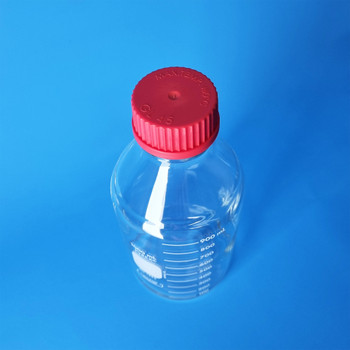
PYREX® Heatproof Glass Media Bottle, GL45 Red High Temperature Screw Cap, 1000ml
PYREX
$23.95 +GSTThe iconic PYREX® heavy duty laboratory bottle. PYREX® heavy duty bottles which can be used for storage as well as mixing and sampling. Glass bead indicates full capacity line on 100 mL through 2L...$23.95 +GST -


PYREX® Heatproof Square Screw Cap Bottle, Stackable Space Saving, 1000ml
PYREX
$25.85 +GSTThese PYREX® heavy duty square bottles are manufactured from PYREX® borosilicate glass for chemical and thermal resistance. Square bottles are easier to handle, require less space (13-20%) on the...$25.85 +GST -


PYREX® Heatproof Square Screw Cap Bottle, Stackable Space Saving, 500ml
PYREX
$14.45 +GSTThese PYREX® heavy duty square bottles are manufactured from PYREX® borosilicate glass for chemical and thermal resistance. Square bottles are easier to handle, require less space (13-20%) on the...$14.45 +GSTQty in Cart: 0Price:$14.45 +GSTSubtotal: -


PYREX® Heatproof Square Screw Cap Bottle, Stackable Space Saving, 250ml
PYREX
$16.45 +GSTThese PYREX® heavy duty square bottles are manufactured from PYREX® borosilicate glass for chemical and thermal resistance. Square bottles are easier to handle, require less space (13-20%) on the...$16.45 +GST -


PYREX® Heatproof Glass Lab Bottle, GL80 Wide Mouth Screw Cap, 2000ml
PYREX
$55.00 +GSTPYREX® GL80 wide neck media bottles These PYREX® wide mouth bottles are designed for heavy duty storage as well as mixing and sampling. The extra wide mouth (65mm inner diameter) gives...$55.00 +GST -
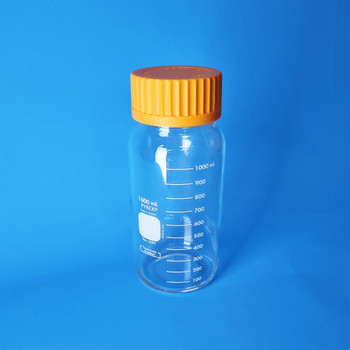
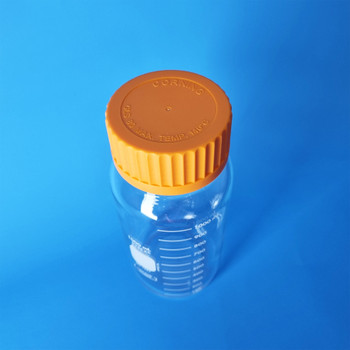
PYREX® Heatproof Glass Lab Bottle, GL80 Wide Mouth Screw Cap, 1000ml
PYREX
$35.00 +GSTPYREX® GL80 wide neck media bottles These PYREX® wide mouth bottles are designed for heavy duty storage as well as mixing and sampling. The extra wide mouth (65mm inner diameter) gives...$35.00 +GSTQty in Cart: 0Price:$35.00 +GSTSubtotal: -


PYREX® Heatproof Glass Media Bottle, GL45 Screw Cap, 5000ml
PYREX
$149.00 +GSTThe iconic PYREX® heavy duty laboratory bottle. PYREX® heavy duty bottles which can be used for storage as well as mixing and sampling. Includes linerless, one-piece autoclavable polypropylene cap...$149.00 +GSTQty in Cart: 0Price:$149.00 +GSTSubtotal: -


PYREX® Heatproof Glass Media Bottle, GL45 Screw Cap, 2000ml
PYREX
$39.98 +GSTThe iconic PYREX® heavy duty laboratory bottle. PYREX® heavy duty bottles which can be used for storage as well as mixing and sampling. Includes linerless, one-piece autoclavable polypropylene cap...$39.98 +GSTQty in Cart: 0Price:$39.98 +GSTSubtotal: -
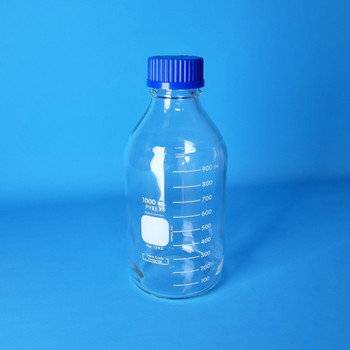

PYREX® Heatproof Glass Media Bottle, GL45 Screw Cap, 1000ml
PYREX
$16.95 +GSTThe iconic PYREX® heavy duty laboratory bottle. PYREX® heavy duty bottles which can be used for storage as well as mixing and sampling. Includes linerless, one-piece autoclavable polypropylene cap...$16.95 +GST -


PYREX® Heatproof Glass Media Bottle, GL45 Screw Cap, 500ml (Pack of 2)
PYREX
$19.85 +GSTThe iconic PYREX® heavy duty laboratory bottle. PYREX® heavy duty bottles which can be used for storage as well as mixing and sampling. Includes linerless, one-piece autoclavable polypropylene cap...$19.85 +GST -


PYREX® Heatproof Glass Media Bottle, GL45 Screw Cap, 250ml (Pack of 2)
PYREX
$17.98 +GSTThe iconic PYREX® heavy duty laboratory bottle. PYREX® heavy duty bottles which can be used for storage as well as mixing and sampling. Includes linerless, one-piece autoclavable polypropylene cap...$17.98 +GST -

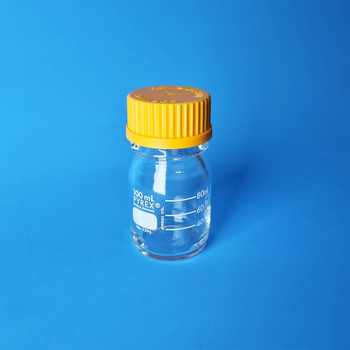
PYREX® Heatproof Glass Media Bottle, GL45 Screw Cap, 100ml (Pack of 2)
PYREX
$15.98 +GSTPYREX® heavy duty laboratory bottle. PYREX® heavy duty bottles which can be used for storage as well as mixing and sampling. Includes linerless, one-piece autoclavable polypropylene cap with drip...$15.98 +GST -


PYREX® Heatproof Slim Lab Bottle, 250ml (Pack of 2)
PYREX
$15.48 +GSTThese round bottles can be used for storage as well as mixing and storage. The indented side grips ensure easy handling. The bottles are graduated to their full working volume. The narrow profile...$15.48 +GSTQty in Cart: 0Price:$15.48 +GSTSubtotal: -
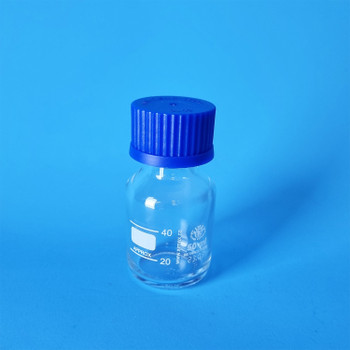
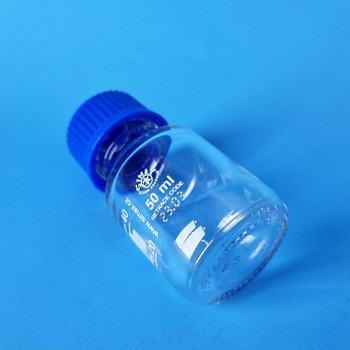
SIMAX® Heatproof Lab Bottle with Screw Cap Lid, 50ml (10 Pack Special)
SIMAX
$49.90 +GSTThe iconic SIMAX heatproof borosilicate glass laboratory bottle. Manufactured from SIMAX borosilicate glass 3.3 which is resistant to heat and almost all chemicals. Autoclavable at 121°C for 30...$49.90 +GSTQty in Cart: 0Price:$49.90 +GSTSubtotal: -

SIMAX® Heatproof Glass Dropping Bottle with Dropper, Clear, 100ml
SIMAX
$18.00 +GSTThese 100ml SIMAX® heatproof dropping bottles are manufactured from borosilicate glass and are supplied complete dropping pipette, which is fitted with a vinyl rubber teat. 100ml...$18.00 +GST -

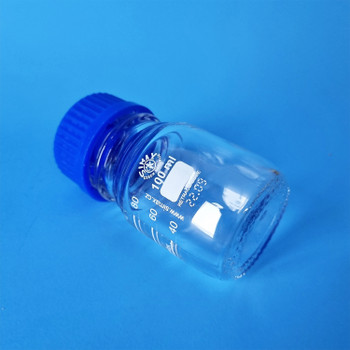
Heatproof Borosilicate Laboratory Bottle Pack (5 Various Sizes)
SIMAX
$39.50 +GSTThe essential heatproof borosilicate glass laboratory bottle. Both SIMAX and LabDirect in-house bottles supplied Manufactured from borosilicate glass 3.3 which is resistant to heat and almost all...$39.50 +GST -


SIMAX® Heatproof Lab Bottle with Screw Cap Lid, 10 Litres
SIMAX
$284.00 +GSTThe essential SIMAX heatproof borosilicate glass laboratory bottle. Manufactured from SIMAX borosilicate glass 3.3 which is resistant to heat and almost all chemicals. Autoclavable at 121°C for...$284.00 +GSTQty in Cart: 0Price:$284.00 +GSTSubtotal: -


SIMAX® Heatproof Lab Bottle with Screw Cap Lid, 5000ml
SIMAX
$110.00 +GSTThe essential SIMAX heatproof borosilicate glass laboratory bottle. Manufactured from SIMAX borosilicate glass 3.3 which is resistant to heat and almost all chemicals. Autoclavable at 121°C for...$110.00 +GSTQty in Cart: 0Price:$110.00 +GSTSubtotal: -


SIMAX® Heatproof Lab Bottle with Screw Cap Lid, 2000ml
SIMAX
$24.90 +GSTThe essential SIMAX heatproof borosilicate glass laboratory bottle. Manufactured from SIMAX borosilicate glass 3.3 which is resistant to heat and almost all chemicals. Autoclavable at 121°C for...$24.90 +GSTQty in Cart: 0Price:$24.90 +GSTSubtotal: -

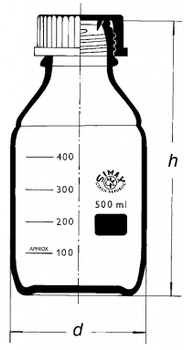
SIMAX® Heatproof Lab Bottle with Screw Cap Lid, 1000ml
SIMAX
$13.89 +GSTThe essential SIMAX heatproof borosilicate glass laboratory bottle. Manufactured from SIMAX borosilicate glass 3.3 which is resistant to heat and almost all chemicals. Autoclavable at 121°C for...$13.89 +GST -
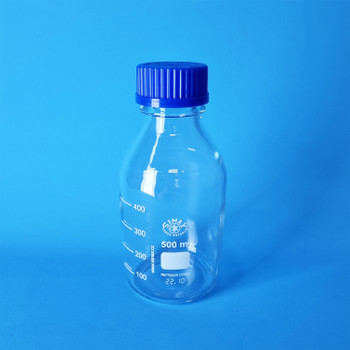

SIMAX® Heatproof Lab Bottle with Screw Cap Lid, 500ml (Pack of 2)
SIMAX
$14.45 +GSTThe essential SIMAX heatproof borosilicate glass laboratory bottle. Manufactured from SIMAX borosilicate glass 3.3 which is resistant to heat and almost all chemicals. Autoclavable at 121°C for...$14.45 +GSTQty in Cart: 0Price:$14.45 +GSTSubtotal: -


SIMAX® Heatproof Lab Bottle with Screw Cap Lid, 250ml (Pack of 2)
SIMAX
$11.99 +GSTThe essential SIMAX heatproof borosilicate glass laboratory bottle. Manufactured from SIMAX borosilicate glass 3.3 which is resistant to heat and almost all chemicals. Autoclavable at 121°C for...$11.99 +GST -

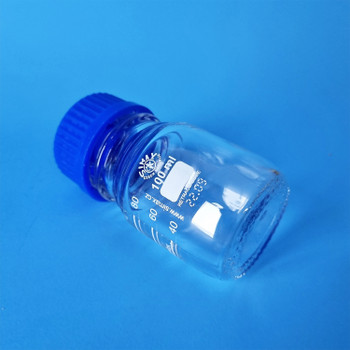
SIMAX® Heatproof Lab Bottle with Screw Cap Lid, 100ml (Pack of 2)
SIMAX
$13.50 +GSTThe essential SIMAX heatproof borosilicate glass laboratory bottle. Manufactured from SIMAX borosilicate glass 3.3 which is resistant to heat and almost all chemicals. Autoclavable at 121°C for...$13.50 +GST -


SIMAX® Heatproof Lab Bottle with Screw Cap Lid, 50ml (Pack of 2)
SIMAX
$10.98 +GSTThe iconic SIMAX heatproof borosilicate glass laboratory bottle. Manufactured from SIMAX borosilicate glass 3.3 which is resistant to heat and almost all chemicals. Autoclavable at 121°C for 30...$10.98 +GSTQty in Cart: 0Price:$10.98 +GSTSubtotal: -

SIMAX® Spare Screw Cap Lids, Red High Temperature PBT, GL45 (Pack of 4)
SIMAX
$17.95 +GSTRed colour code your bottles for easy identificationPBT screw caps are available to fit all GL45 thread media-lab bottles. These are high temperature caps which can be heated to 180°C. GL45...$17.95 +GSTQty in Cart: 0Price:$17.95 +GSTSubtotal: -

SIMAX® Spare Screw Cap Lids, Blue Polypropylene, GL45 (Pack of 4)
SIMAX
$14.95 +GSTBlue colour code your bottles for easy identificationPolypropylene screw caps are available to fit all GL45 thread media-lab bottles. GL45 standard size Polypropylene plug seal cap ideal for...$14.95 +GST -


SIMAX® Heatproof Media Bottle with Red High Temperature Cap, 2000ml
SIMAX
$27.00 +GSTBottles complete with thermoplastic polyester cap Withstands hot air sterilisation up to 180°C White graduations and marking spot Manufactured from temperature and chemically...$27.00 +GSTQty in Cart: 0Price:$27.00 +GSTSubtotal: -


SIMAX® Heatproof Media Bottle with Red High Temperature Cap, 1000ml
SIMAX
$23.20 +GSTBottles complete with thermoplastic polyester cap Withstands hot air sterilisation up to 180°C White graduations and marking spot Manufactured from temperature and chemically...$23.20 +GST -


SIMAX® Heatproof Media Bottle with Red High Temperature Cap, 500ml
SIMAX
$18.96 +GSTBottles complete with thermoplastic polyester cap Withstands hot air sterilisation up to 180°C White graduations and marking spot Manufactured from temperature and chemically...$18.96 +GSTQty in Cart: 0Price:$18.96 +GSTSubtotal: -


SIMAX® Heatproof Media Bottle with Red High Temperature Cap, 250ml
SIMAX
$16.60 +GSTBottles complete with thermoplastic polyester cap Withstands hot air sterilisation up to 180°C White graduations and marking spot Manufactured from temperature and chemically...$16.60 +GSTQty in Cart: 0Price:$16.60 +GSTSubtotal: -

SIMAX® Heatproof Media Bottle with Red High Temperature Cap, 100ml
SIMAX
$12.85 +GSTBottles complete with thermoplastic polyester cap Withstands hot air sterilisation up to 180°C White graduations and marking spot Manufactured from temperature and chemically resistant SIMAX®...$12.85 +GSTQty in Cart: 0Price:$12.85 +GSTSubtotal: -


SIMAX® Heatproof Amber Coated Media Bottle with Screw Cap, 1000ml
SIMAX
$49.88 +GSTSIMAX borosilicate amber glass bottles to protect light sensitive samples Ideal for the storage of light sensitive materials, these bottles are amber coated versions of the iconic GL45...$49.88 +GST -


SIMAX® Heatproof Amber Coated Media Bottle with Screw Cap, 500ml
SIMAX
$44.00 +GSTSIMAX borosilicate amber glass bottles to protect light sensitive samples Ideal for the storage of light sensitive materials, these bottles are amber coated versions of the iconic GL45...$44.00 +GST -

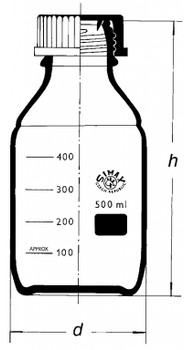
SIMAX® Heatproof Amber Coated Media Bottle with Screw Cap, 250ml
SIMAX
$29.80 +GSTSIMAX borosilicate amber glass bottles to protect light sensitive samples Ideal for the storage of light sensitive materials, these bottles are amber coated versions of the iconic GL45...$29.80 +GSTQty in Cart: 0Price:$29.80 +GSTSubtotal: -


SIMAX® Heatproof Amber Coated Media Bottle with Screw Cap, 100ml
SIMAX
$25.80 +GSTSIMAX borosilicate amber glass bottles to protect light sensitive samples Ideal for the storage of light sensitive materials, these bottles are amber coated versions of the iconic GL45...$25.80 +GSTQty in Cart: 0Price:$25.80 +GSTSubtotal: -


SIMAX® Heatproof Amber Coated Media Bottle with Screw Cap, 50ml
SIMAX
$19.80 +GSTSIMAX borosilicate amber glass bottles to protect light sensitive samples Ideal for the storage of light sensitive materials, these bottles are amber coated versions of the iconic GL45...$19.80 +GSTQty in Cart: 0Price:$19.80 +GSTSubtotal: -


SIMAX® Heatproof Glass Lab Bottle, Wide Mouth GL80 Screw Cap, 2000ml
SIMAX
$38.50 +GSTHeatproof borosilicate wide neck media bottles with GL80 screw cap These bottles are a wide neck version of the standard GL45 screw cap media-lab bottles and are ideal for the storage...$38.50 +GSTQty in Cart: 0Price:$38.50 +GSTSubtotal: -


SIMAX® Heatproof Glass Lab Bottle, Wide Mouth GL80 Screw Cap, 1000ml
SIMAX
$17.49 +GSTHeatproof borosilicate wide neck media bottles with GL80 screw cap These bottles are a wide neck version of the standard GL45 screw cap media-lab bottles and are ideal for the storage...$17.49 +GST -


SIMAX® Heatproof Glass Lab Bottle, Wide Mouth GL80 Screw Cap, 500ml
SIMAX
$16.25 +GSTHeatproof borosilicate wide neck media bottles with GL80 screw cap These bottles are a wide neck version of the standard GL45 screw cap media-lab bottles and are ideal for the storage of a...$16.25 +GST -

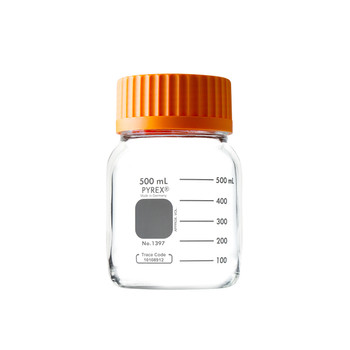
PYREX® Heatproof Glass Lab Bottle, GL80 Wide Mouth Screw Cap, 500ml
PYREX
$26.92 +GSTPYREX® GL80 wide neck media bottles These PYREX® wide mouth bottles are designed for heavy duty storage as well as mixing and sampling. The extra wide mouth (65mm inner diameter) gives...$26.92 +GSTQty in Cart: 0Price:$26.92 +GSTSubtotal: -


PYREX® Heatproof Square Shaped Screw Cap Media Bottle, Stackable, 1000ml
PYREX
$22.97 +GSTSquare Media Lab Bottles - Space Saver Bottles Perfect for use in busy labs where space is at a minimum. Can be stacked inside baths, fridges or bench tops.• Square shape allows closer stacking in...$22.97 +GST -

Hand Protection Mitt, Hot Grip
LABCO
$13.95 +GSTProvides protection against hot containers and surfaces up to +250°C and cold containers down to -40°C. Material: Silicone$13.95 +GST -


Density Bottle, Calibrated, 100ml
LABCO
$73.00 +GSTManufactured according to ISO 3507 standard. The upper and lower ends of the stopper are ground and excellently polished. Calibrated density bottles are made to contain (In) to 0,001 ml. Each...$73.00 +GST -


Density Bottle, Calibrated, 50ml
LABCO
$65.00 +GSTManufactured according to ISO 3507 standard. The upper and lower ends of the stopper are ground and excellently polished. Calibrated density bottles are made to contain (In) to 0,001 ml. Each...$65.00 +GST -


Density Bottle, Calibrated, 25ml
LABCO
$57.00 +GSTManufactured according to ISO 3507 standard. The upper and lower ends of the stopper are ground and excellently polished. Calibrated density bottles are made to contain (In) to 0,001 ml. Each...$57.00 +GST -

Borosilicate Glass Lab Bottle, Screw Cap, 10 Litres
LABDIRECT
$332.00 +GSTLabDirect's own in-house glass laboratory bottle. Manufactured from borosilicate glass 3.3 which is resistant to heat and almost all chemicals. Autoclavable at 121°C and 1.1 bar for 30 minutes. Caps...$332.00 +GSTQty in Cart: 0Price:$332.00 +GSTSubtotal: -


Density Bottle, Calibrated, 10ml
LABCO
$54.00 +GSTManufactured according to ISO 3507 standard. The upper and lower ends of the stopper are ground and excellently polished. Calibrated density bottles are made to contain (In) to 0,001 ml. Each...$54.00 +GST -

Laboratory Screw Cap Bottle, Clear Borosilicate Glass, 2000ml
LABDIRECT
$25.00 +GSTLabDirect's own in-house glass laboratory bottle. Manufactured from borosilicate glass 3.3 which is resistant to heat and almost all chemicals. Autoclavable at 121°C and 1.1 bar for 30 minutes. Caps...$25.00 +GST -

Laboratory Screw Cap Bottle, Clear Borosilicate Glass, 500ml (Pack of 2)
LABDIRECT
$14.45 +GSTLabDirect's own in-house glass laboratory bottle.Manufactured from borosilicate glass 3.3 which is resistant to heat and almost all chemicals. Autoclavable at 121°C and 1.1 bar for 30 minutes. Caps...$14.45 +GST -

Laboratory Screw Cap Bottle, Clear Borosilicate Glass, 250ml (Pack of 2)
LABDIRECT
$11.99 +GSTLabDirect's own in-house glass laboratory bottle. Manufactured from borosilicate glass 3.3 which is resistant to heat and almost all chemicals. Autoclavable at 121°C and 1.1 bar for 30 minutes. Caps...$11.99 +GST -


PTFE Lab Bottle Pourer Cap (GL45 Screw Thread)
TEFLEX
$84.95 +GSTNEW! These PTFE bottle caps allow users to pour chemicals or hazardous liquids quickly and safely without any messy spillage. These caps have a GL45 screw thread and screw directly to our range of...$84.95 +GST
FAQs
What is a borosilicate glass bottle, and why is it used in the lab?
A borosilicate glass bottle is a heat-resistant, chemically stable laboratory container used for storing, mixing and transporting samples. Its durability makes it ideal for demanding lab environments.
How do chemistry bottles differ from general-purpose bottles?
Chemistry bottles are designed for storing reagents, solvents and reactive solutions. They often feature specialised closures, tighter sealing or specific shapes compared to general-purpose bottles.
What are the chemical and thermal resistances of borosilicate glass bottles?
A borosilicate bottle offers excellent resistance to thermal shock and is compatible with most common acids, bases and solvents. It tolerates high temperatures and autoclaving without degrading.
Can I store aggressive reagents or solvents in borosilicate bottles?
Yes, many aggressive chemicals can be safely stored in borosilicate glass bottles, though strongly alkaline solutions, hydrofluoric acid and some concentrated reagents may require alternative materials like PTFE.
Are there compatibility issues when storing chemicals in glass vs plastic?
Some chemicals may permeate or degrade plastics, making borosilicate containers more suitable. Conversely, certain highly reactive or HF-containing solutions require plastic or PTFE instead of glass.
How do I choose between a borosilicate bottle and alternative materials like PTFE or plastic?
Choose a borosilicate glass bottle for general chemical storage, heating, autoclaving or when clarity is needed. Select PTFE for highly reactive or HF-containing substances and plastic for lightweight, impact-resistant storage.
What care and maintenance do borosilicate bottles require?
Clean with laboratory detergent, rinse thoroughly and avoid abrasive scrubbing. Inspect regularly for chips or cracks, as damage can compromise its integrity.
What is the lifespan of a glass laboratory bottle, and when should it be replaced?
A glass laboratory bottle can last for years with proper care. Replace it immediately if you notice cracks, chips, clouding or compromised closures.