
Laboratory Hotplates & Hotplate Stirrers
Laboratory Hotplates for Controlled Heating
Laboratory hotplates provide a heated surface for warming suitable vessels and samples without a built-in stirring function. They suit tasks where heating is required and mixing is unnecessary or managed separately. LabDirect's range includes heating-only models alongside combined heating and stirring equipment, with different plate sizes and control options for laboratory bench work.
When comparing lab hotplates, consider the vessel footprint, required working temperature and the level of temperature control your method needs. Digital laboratory hotplates and analogue models offer different ways to set and monitor heating; always check the individual product specifications.
Laboratory Hotplate Stirrers for Heating and Mixing
Laboratory hotplate stirrers combine a heated plate with a magnetic drive that rotates a compatible stirring bar inside the vessel. This supports routine mixing while heating solutions, preparing reagents or dissolving suitable materials. Our compact benchtop magnetic hotplate stirrers are available in analogue and digital designs, with a choice of plate styles and sizes.
Depending on the model, features include analogue or digital RPM control, large top plate surfaces, smooth starting and stopping of stirring, strong magnetic coupling and easy-clean ceramic-coated plates. The range includes models with stirring capacities of up to 10 litres; capacity and performance must be checked for the selected instrument and liquid. These features vary by model and are not shared by every product.
Hotplate vs Hotplate Stirrer: Which Should You Choose?
Choose a heating-only hotplate when your method calls for heat without magnetic mixing. Choose a hotplate with magnetic stirrer when the liquid needs to be mixed during heating. Magnetic stirring is most suitable when the liquid, vessel and stirring bar allow stable coupling. More viscous mixtures or demanding mixing tasks may call for one of our Digital Overhead Mixers, selected for the required torque and volume.
Vessel shape also matters. Flat-bottomed vessels need stable contact with the plate. For suitable round-bottom flasks, compare heating mantles designed to fit the flask instead.
Choosing a Laboratory Hotplate or Stirrer
Maximum Temperature
Check the specified maximum plate temperature and the control range against your process. Plate temperature is not the same as the liquid temperature: vessel material, sample volume and heat loss all affect the result. Where your method needs direct sample-temperature control, check whether the model supports an external probe and whether the required sensor and accessories are included.
Plate Size and Material
Select a plate that safely supports your vessel, with enough bench space around the unit. Ceramic and ceramic-coated surfaces can offer convenient cleaning and chemical resistance, but compatibility depends on the specific material and chemicals used. Compare the manufacturer's cleaning and temperature limits for each surface. Choose suitable heat-resistant laboratory glassware and beakers with a base appropriate for the plate.
Stirring Speed and Capacity
Compare the stated stirring-speed range in RPM and the rated stirring capacity. The usable volume depends on liquid viscosity, vessel shape and stirring-bar size, as well as the instrument. A high maximum RPM does not by itself guarantee effective mixing. Start at a low speed and increase gradually to maintain stable stirring without splashing or losing magnetic coupling, following the operating instructions.
Digital vs Analogue Control
Analogue controls offer straightforward manual adjustment. Digital hotplate stirrers provide a display for settings or measured values, depending on the model, which can help operators repeat and record operating conditions. Check what the display actually measures, how temperature is controlled and whether probe feedback is available. Digital control alone does not establish the accuracy of the sample temperature.
Common Laboratory Applications
Laboratory heating plates and hotplate stirrers support reagent and solution preparation, controlled warming, dissolution, teaching experiments and routine research or quality-control work. Select the equipment around the method and chemical compatibility. Use suitable vessels and follow the manufacturer's operating instructions; hotplate heating should not be assumed to sterilise a sample.
Laboratory Hotplates and Hotplate Stirrers from LabDirect Australia
Compare the heating-only and combined models below for plate size, maximum temperature, stirring capacity and control features. Complete your setup with our laboratory equipment range, explore related equipment or view current discounts. For help selecting the right model, contact our team with your vessel size, liquid volume, viscosity and temperature requirements.
- Product
- Qty in Cart
- Quantity
- Price
- Subtotal
-

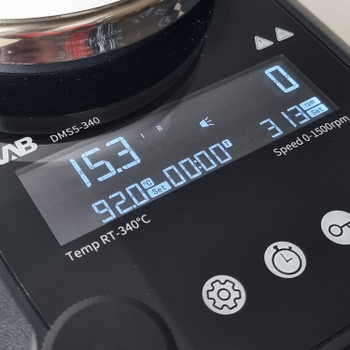
Digital Hotplate Stirrer with Sensor Control Set, 135mm Diameter Ceramic Plate, Max 340°C
DLAB
$675.00 +GSTDigital Laboratory Hotplate with Magnetic Stirring This professional magnetic hotplate stirrer features a durable ceramic-coated aluminium plate for excellent corrosion resistance and easy cleaning,...$675.00 +GST -


Digital Hotplate Stirrer with Sensor Control Set, 135mm Diameter Plate, Max 320°C
FOUR E's
$650.00 +GSTDigital Laboratory Hotplate with Magnetic Stirring This hotplate stirrer is ideal for testing applications where heating and stirring is required. This model features a ceramic coated heating plate...$650.00 +GST -
On Sale


Digital Hotplate Stirrer with Sensor Control Set, 180x180mm Ceramic Plate, Max 380°C
LK LAB
MSRP: $898.00Now: $625.00 +GSTWas: $898.00Digital Laboratory Hotplate with Magnetic Stirring These hotplate stirrers are ideal for testing applications where heating and stirring is required. All models feature a ceramic coated heating...MSRP: $898.00Now: $625.00 +GSTWas: $898.00 -


Lab Hotplate with Magnetic Stirrer, Simmerstat 420°C Control, 200x180mm PTFE Coated Plate
IEC Equipment
$585.00 +GSTMagnetic Stirrer & Hot Plate combination with 'Simmerstat' temperature control. Front panel provides the user with mains switch, Thermostat heat control from 50 to 320°C. and speed control for...$585.00 +GST -


Lab Hotplate with Magnetic Stirrer, Thermostat 320°C Control, 200x180mm PTFE Coated Plate
IEC Equipment
$665.00 +GSTMagnetic Stirrer & Hot Plate combination with 'Thermostat' temperature control. Front panel provides the user with mains switch, Thermostat heat control from 50 to 320°C and speed control for...$665.00 +GST
FAQs
What is a hotplate stirrer, and how does it differ from other devices?
A hotplate stirrer combines heating and mixing in a single unit. Unlike a standard hot plate or a standalone magnetic stirrer, a hot plate and stirrer provides simultaneous, controlled temperature and agitation for greater efficiency and consistency.
How do I choose the correct size, capacity and stir speed?
Match the plate size to your typical vessels, ensure the stirring capacity supports your liquid volume and select speed ranges that allow controlled mixing without splashing or vortexing.
Can I use a hot plate stirrer with different container types?
Yes, a hot plate with magnetic stirrer works with beakers, flasks and other flat-bottom lab vessels. For best results, use containers compatible with the stir bar and ensure stable contact with the plate.
What are best-practice procedures for heating and stirring simultaneously?
- Increase speed gradually
- Avoid creating deep vortexes
- Ramp temperature slowly to prevent thermal shock
- Ensure the stir bar is appropriately sized for the vessel.
What maintenance or calibration steps are required?
Clean the plate surface regularly, check for smooth rotation of the magnetic field, inspect cables for damage and verify temperature accuracy on digital models. Some lab hotplate stirrers may require periodic calibration for temperature control.
What hazards or misuse scenarios should I avoid?
Common issues include overheating samples, using incompatible vessels, leaving a stir bar spinning unattended or exposing electronics to spills. Avoid using cracked glassware or vessels too large for the plate.
Are specialised models available, and how do they help?
Yes, options include ceramic-coated plates for chemical resistance, digital controllers for precise RPM and temperature settings and high-capacity units for larger volumes. These upgrades improve reproducibility and safety.
How does simultaneous heating and stirring affect experimental reproducibility?
Stable mixing and controlled temperature create more uniform reaction conditions. Monitor parameters such as RPM, temperature, vessel size and stir bar selection to ensure consistent results across experiments.